Operation Inherent Resolve: They Built a Country Out of Blood and Terror
There are moments in modern history when something so dark, so audacious, so utterly unprecedented emerges from the chaos of…
There are moments in modern history when something so dark, so audacious, so utterly unprecedented emerges from the chaos of war that the world stops and stares not quite believing what it is seeing. In the summer of 2014, the world had one of those moments. A black flag rose over the city of Mosul. A man in black robes stepped to a pulpit and declared, before the cameras of his own propaganda machine, that a new nation had been born. Not a rebel group. Not a militia. A state. A caliphate. Governed by the most brutal interpretation of religious law the modern world had ever witnessed. They called it the Islamic State. And for a brief, terrifying period it was real.
To understand how this happened, you have to understand the wreckage that preceded it. The American invasion of Iraq in 2003 toppled a government and dissolved an army but it did not replace them with stability. What followed was a decade of sectarian conflict, power vacuums, and festering resentment. Al-Qaeda in Iraq emerged from that chaos. It was brutal, it was ideologically extreme, and it was eventually beaten back by the American surge and the Sunni Awakening of 2007 and 2008. But it was not destroyed.
Its remnants went underground, regrouped, and waited. And when the Syrian civil war erupted in 2011 creating the largest ungoverned space in the modern Middle East those remnants moved. They crossed the border. They recruited. They absorbed other factions. They rebranded. And under the leadership of a former American detainee named Abu Bakr al-Baghdadi, they became something the world had never seen before. A terrorist organization that wanted and seized actual territory.
By early 2014, the group that would become known as ISIS controlled vast stretches of eastern Syria. Then came June. In a military offensive that shocked professional analysts around the world, ISIS swept across northwestern Iraq with stunning speed. Mosul Iraq’s second-largest city, home to over a million people fell in three days. The Iraqi army, despite being trained, equipped, and funded by the United States to the tune of tens of billions of dollars, collapsed.
Soldiers abandoned their uniforms, their weapons, their vehicles, and fled. ISIS captured American-supplied Humvees, artillery, and weapons. They captured banks. They captured oilfields. And on June 29th, 2014, al-Baghdadi stood in the Great Mosque of al-Nuri in Mosul and declared the caliphate. He named himself Caliph Ibrahim the leader of all Muslims on earth. The black flag of ISIS flew from government buildings. The nightmare was no longer a threat. It was a fact.
The response from the international community was initially hesitant, fragmented, and politically complicated. President Obama, who had campaigned on ending American military involvement in the Middle East, was now facing a crisis that demanded a response. On August 7th, 2014, American aircraft struck ISIS targets in Iraq for the first time. It was the opening move of what would become one of the most complex and sustained military campaigns of the twenty-first century.
On September 10th, Obama addressed the nation. He announced a comprehensive strategy airstrikes, support for local ground forces, intelligence sharing, and the building of a broad international coalition. The operation was given a name: Operation Inherent Resolve. The name itself was telling not “Operation Victory,” not “Operation Liberation.” Inherent Resolve. A grinding, deliberate, long-term commitment to a problem with no clean solution.
What followed over the next four years was a campaign unlike anything America had conducted before. There would be no large-scale American ground invasion. No armored columns rolling through desert highways. The strategy was built on a different architecture American and coalition airpower combined with local ground forces who would do the fighting, the bleeding, and the dying on the ground. In Iraq, that meant rebuilding and supporting the Iraqi Security Forces and, critically, empowering the Kurdish Peshmerga one of the most experienced and battle-hardened fighting forces in the region.
In Syria, it meant working with the Syrian Democratic Forces, a coalition dominated by Kurdish YPG fighters, a partnership that created its own enormous political complications with NATO ally Turkey. This was warfare by proxy, by partnership, by relentless aerial attrition. And it was slow.
The air campaign was staggering in its scale. Coalition aircraft American, British, French, Australian, Jordanian, Emirati, Canadian, and dozens of others flew tens of thousands of sorties over Iraq and Syria. Bridges were destroyed. Supply lines were cut. Command centers were targeted. ISIS’s finances built on oil smuggling, taxation of conquered populations, and looting were systematically attacked.
Oil infrastructure under ISIS control was struck. Cash storage facilities holding hundreds of millions of dollars were bombed. The goal was not just to kill fighters it was to strangle the organization economically, logistically, and structurally. To make the caliphate ungovernable from within even as it was being attacked from without.
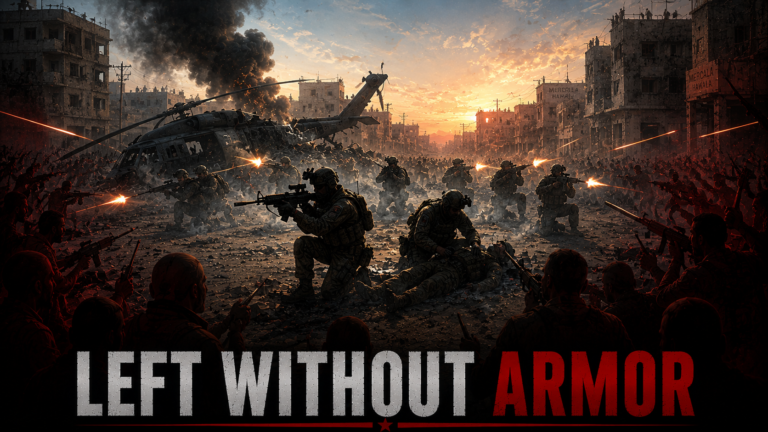
On the ground, the battles were savage. ISIS did not fight like a conventional army it had spent years preparing its urban defenses, booby-trapping buildings, constructing tunnel networks beneath cities, and deploying vehicle-borne suicide bombers as a tactical weapon. The battle for Tikrit in early 2015. The brutal campaign for Ramadi, which fell to ISIS in May 2015 and was retaken by Iraqi forces in December of the same year in some of the most intense urban combat since Fallujah.
The fight for Fallujah itself in 2016. Each city liberated came at enormous cost to the fighters who took it back and to the civilian populations trapped inside. ISIS used human shields deliberately, systematically, as a matter of policy. Every advance cost blood. Every block was contested.
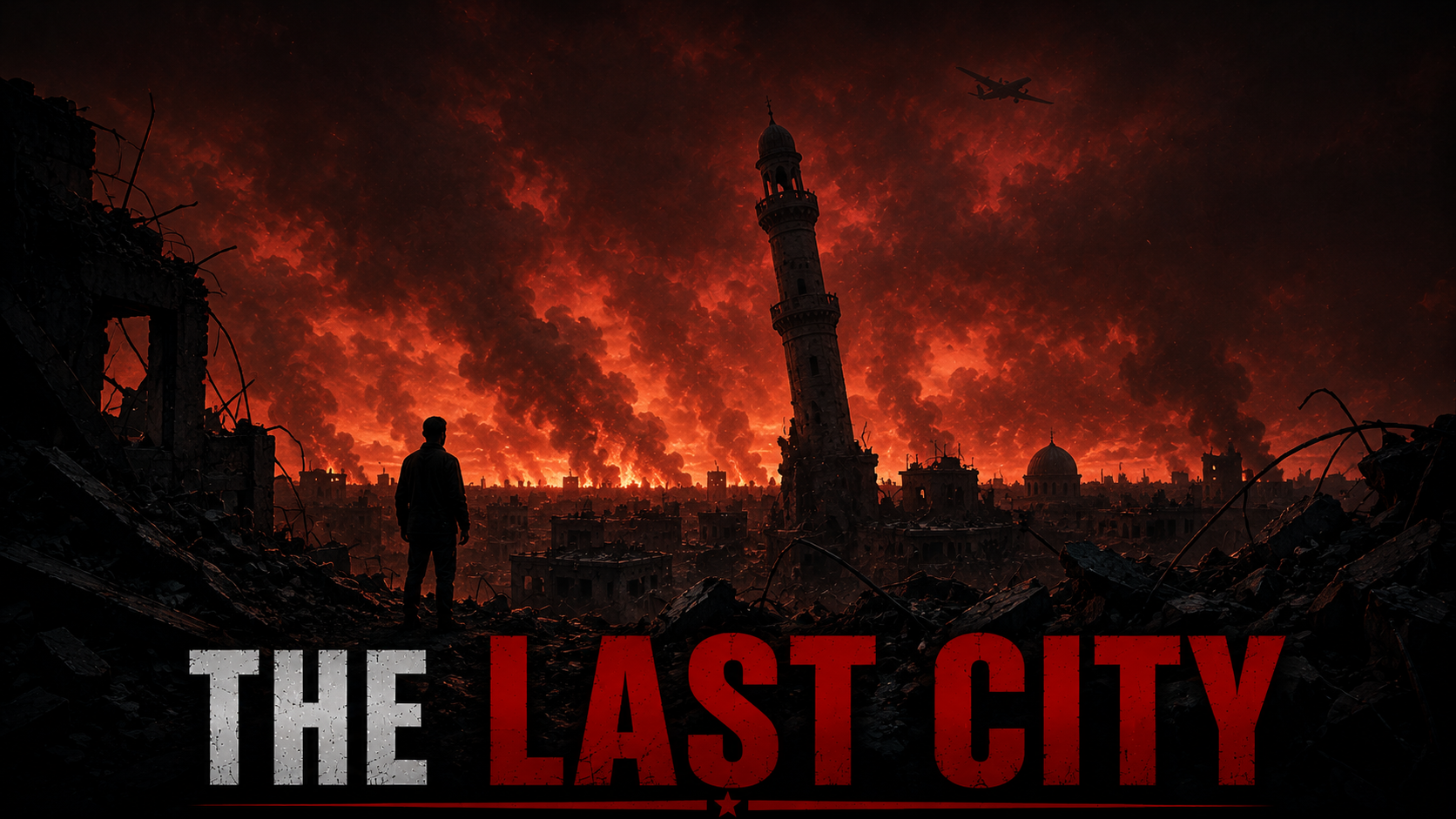
Then came Mosul. The crown jewel. The city where the caliphate had been declared. The battle for Mosul began in October 2016 and would become the largest urban battle anywhere in the world since the Second World War. Over one hundred thousand Iraqi Security Forces, Kurdish Peshmerga, and coalition-backed fighters converged on a city still home to hundreds of thousands of civilians. ISIS fighters estimated at between five and ten thousand prepared to hold every street.
The fighting was floor by floor, room by room. Suicide bombers detonated in crowded evacuation corridors. Snipers targeted civilians attempting to flee. Entire neighborhoods were reduced to rubble. The west side of the city the old city, the ancient quarters was effectively destroyed. Nine months of combat. Thousands of soldiers killed. Tens of thousands of civilians displaced or killed in the crossfire. And on July 10th, 2017, Iraq’s Prime Minister stood in Mosul and declared victory. The black flag was gone. The caliphate’s capital in Iraq was liberated. But the war was not over.
In Syria, the final campaign focused on Raqqa ISIS’s de facto capital, the city it had transformed into the administrative heart of its self-declared state. The Syrian Democratic Forces, backed by American Special Operations advisors and devastating coalition airstrikes, surrounded and closed in on Raqqa through the brutal summer of 2017.
The battle lasted four months. When it ended in October 2017, Raqqa looked like Stalingrad. The city was in ruins. Eighty percent of it, by some estimates, was damaged or destroyed. ISIS’s black flags were gone. In their place exhausted fighters, shattered buildings, and the overwhelming task of rebuilding a city and a society from almost nothing.
By December 2017, the territorial caliphate was functionally destroyed. Iraq declared military victory. The SDF controlled Raqqa and vast stretches of northeastern Syria. The land mass that ISIS had governed at its peak an area roughly the size of the United Kingdom, home to eight to ten million people had been reduced to scattered pockets.
Al-Baghdadi himself had fled, a fugitive moving from safe house to safe house in the desert. He was finally killed in October 2019 in a U.S. Special Operations raid in northwestern Syria cornered in a tunnel, detonating a suicide vest as American operators closed in. The man who had declared himself Caliph of all Muslims died alone underground, hunted, defeated.
And yet the reckoning with what Operation Inherent Resolve achieved and what it left behind is not simple. The territorial caliphate was destroyed. That is a fact of historic proportion. The most ambitious and most violent attempt to establish an extremist state in the modern era was dismantled by a combination of American airpower, coalition partnership, and the extraordinary sacrifice of Kurdish, Iraqi, and Syrian fighters who bore the overwhelming weight of the ground war. That coalition eighty nations in total represented something genuinely remarkable in a fractured geopolitical world.
But the questions that linger are as heavy as the achievement. The cities of Mosul and Raqqa, ancient places with millennia of history, were reduced to rubble. Hundreds of thousands of civilians were displaced many never returned. The reconstruction that was promised has been slow, incomplete, and underfunded. ISIS as an ideology did not die with its territory.
Its affiliates expanded into West Africa, the Sahel, Mozambique, Afghanistan, the Philippines. Thousands of foreign fighters who had traveled to the caliphate dispersed back across the world, carrying their radicalization with them. The ungoverned spaces that gave ISIS its first opening in 2013 and 2014 in Syria, in parts of Iraq remain contested and fragile to this day.
Operation Inherent Resolve did what it set out to do. It resolved, with inherent and relentless force, the military question of whether the caliphate could survive. The answer was no. But the deeper questions about ideology, about governance, about the conditions that allow something like ISIS to rise in the first place those questions have no military answer. They never did. The black flag was torn down. What grows in the soil beneath it that story is still being written.