Operation Sunset: The Secret CIA Mission That Killed Zawahiri
There are operations that change history. And then there are operations so precise, so deeply buried in shadow, that the…
There are operations that change history. And then there are operations so precise, so deeply buried in shadow, that the world doesn’t fully understand what happened even after the smoke clears. This is one of those operations. A mission with no troops, no invasion, no announcement. Just silence, a rooftop in Kabul, and a decision made at the highest levels of American power. This is Operation Sunset.
To understand why this moment mattered, you have to go back. Back to a September morning in 2001, when the world watched two towers fall and a nation was forced to ask a question it had never truly asked before who did this? The answer came quickly. Osama bin Laden. Al-Qaeda.
A network of terror operating from the mountains of Afghanistan, protected by a regime called the Taliban. But behind bin Laden, working in the shadows, engineering the ideology, the financing, the recruitment was another man. A Cairo-born surgeon turned extremist. A man whose long gray beard and round glasses became a symbol of patient, methodical evil. His name was Ayman al-Zawahiri.
For over two decades, al-Zawahiri operated like a ghost. He was present at the creation of modern global terrorism. He was bin Laden’s closest advisor, his ideological architect. When American forces stormed into Afghanistan in late 2001 and dismantled the Taliban’s grip, al-Zawahiri fled.
When bin Laden was killed in Abbottabad in May 2011, al-Zawahiri did not surface to mourn publicly. He simply assumed command of Al-Qaeda, quietly, cautiously and disappeared deeper into the darkness. Four American presidents had his name on a list. Billions of dollars in intelligence resources were pointed at finding him. And for eleven years after bin Laden’s death, al-Zawahiri remained untouchable.
The intelligence trail was almost always cold. There were whispers Pakistan, Iran, Afghanistan’s tribal belt. Sightings that turned into dead ends. Leads that evaporated. Al-Zawahiri understood surveillance. He had watched what happened to bin Laden. He communicated through couriers, avoided phones, avoided the internet. He moved rarely.
He trusted almost no one. And yet deep inside the CIA’s Counterterrorism Center, a team of analysts never stopped. They tracked not just the man, but the patterns. The networks around him. The money. The messengers. The habits of people who knew people who knew him. This was the kind of intelligence work that never makes headlines the slow, grinding, thankless accumulation of detail. And in late 2021, something shifted.
American forces had just completed the withdrawal from Afghanistan. The Taliban had retaken Kabul in August 2021 in a matter of days a collapse that shocked the world. Scenes at Hamid Karzai International Airport played out in real time on global television.
Crowds desperate to leave. Military transports overwhelmed. America’s longest war ending not with victory, but with an uncomfortable, painful exit. And yet even as the last American soldiers left Afghan soil the intelligence apparatus did not leave with them. The eyes in the sky remained. The networks of informants, carefully cultivated over years, remained. And the analysts watching al-Zawahiri they remained.
What the CIA began to piece together was remarkable. Al-Zawahiri the man who had spent over two decades in hiding had made a mistake. Not a careless mistake. Not a dramatic blunder. A quiet one. A human one. He had returned to Kabul. Under the new Taliban government, the city that had once been the epicenter of America’s war against his network had, perhaps, begun to feel safe again.
He was living in a residential safe house in the Sherpur neighborhood a wealthy district in the Afghan capital, home to embassies and high-walled compounds. He had his family with him. He had a routine. And routines as every intelligence officer knows are the most dangerous thing a wanted man can have.
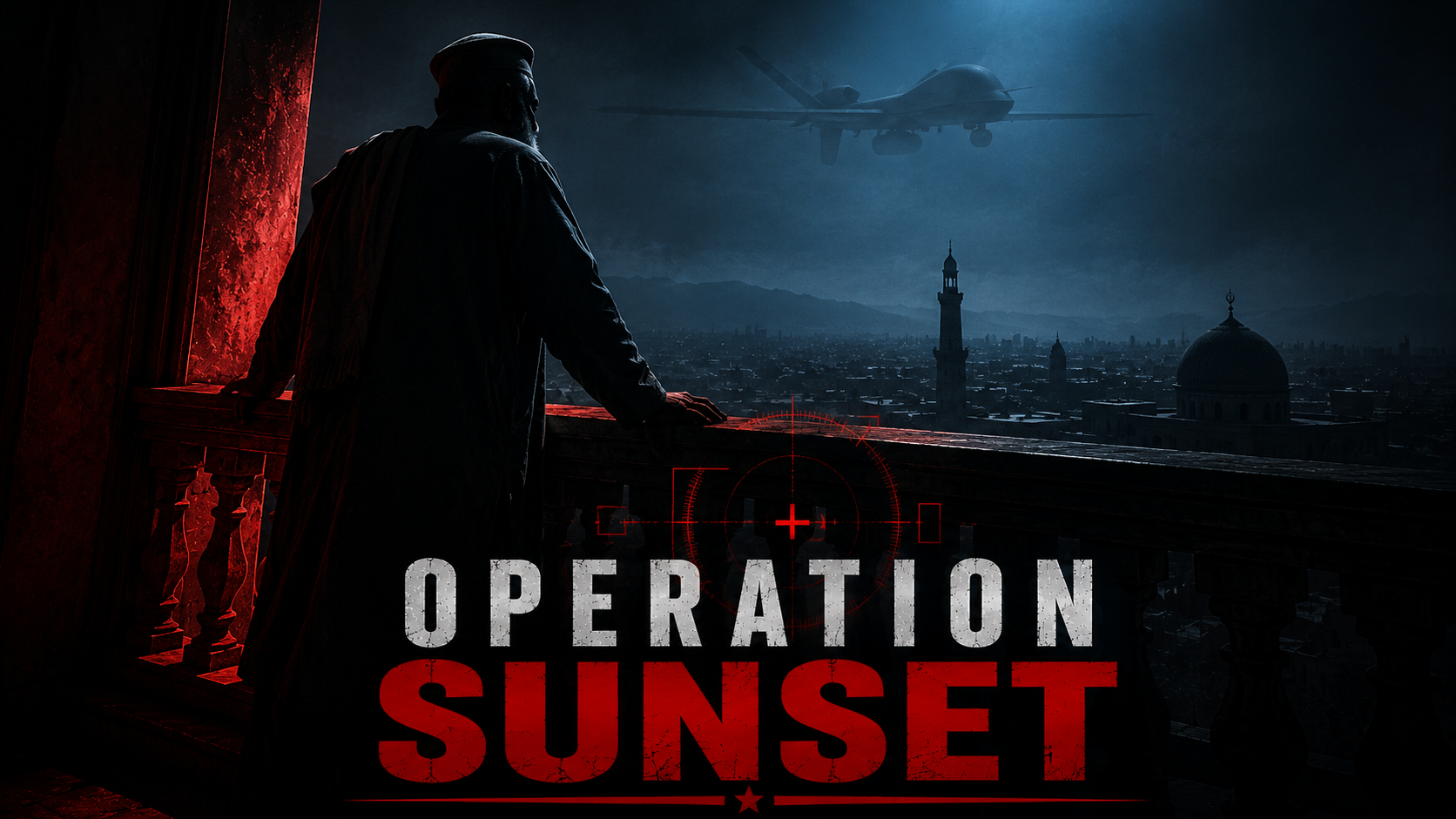
Over the following months, American intelligence built what insiders would describe as a “pattern of life.” They watched the compound. They noted the rhythms. They observed that each morning, the elderly man with the gray beard would step out onto the balcony on the upper floor. He would take the morning air. Sometimes for ten minutes.
Sometimes longer. He appeared comfortable. Unhurried. Perhaps even content. He had no idea that high above him, unseen and silent, American surveillance assets were cataloguing every single appearance. The CIA was not rushing. They were confirming. They needed certainty not just probability before the next step could be taken.
The intelligence was brought to President Biden. The confirmation process was exhaustive. Lawyers reviewed the target package. Intelligence officials were pressed on their confidence levels. The President and his national security team war-gamed the operation multiple times scrutinizing the risk of civilian casualties, examining every possible angle. This was not going to be another Abbottabad a large-scale helicopter raid with boots on the ground in a foreign country now controlled by a hostile government.
This was going to be something quieter. A strike designed to kill one man, in one location, with zero collateral damage. The weapon chosen was the R9X a variant of the Hellfire missile, sometimes called the “flying ginsu.” It carries no explosive warhead. Instead, it deploys a ring of blades on impact, designed to kill with precision kinetic force while leaving surrounding structures and surrounding people intact. It is one of the most precise weapons ever built.
On the morning of July 31st, 2022, al-Zawahiri stepped onto his balcony. It was a quiet Sunday morning in Kabul. The city was beginning to stir. Birds. Traffic in the distance. The low hum of a city waking up. And then from somewhere high above a drone released its payload. Two R9X missiles. The strike was surgical. Al-Zawahiri was killed on his balcony.
His family, inside the building, were unharmed. The building itself suffered only contained damage. No massive explosion. No fire spreading to neighboring homes. No collateral casualties. The most wanted man alive the man who had guided Al-Qaeda for over two decades, the man who had been hunted across four presidencies was gone.
What happened next revealed something extraordinary. The Taliban said nothing. Not immediately. Not clearly. The silence from the Afghan government was deafening and deeply telling. They were furious but they couldn’t say so openly without admitting that they had been harboring al-Zawahiri in the heart of their capital, in direct violation of the Doha Agreement they had signed with the United States.
The agreement had explicitly required the Taliban not to allow Al-Qaeda to operate from Afghan soil. Here was the undeniable, fatal proof that they had broken that promise. The Taliban were caught. Their official statements were vague, contradictory, evasive. They condemned the strike but could not explain why the world’s most wanted terrorist had been living in a compound in Sherpur a neighborhood once used heavily by foreign diplomats and wealthy Afghans without their knowledge. Or with it.
President Biden addressed the nation from the White House on the evening of August 1st, 2022. Standing at the podium, he delivered the news with measured gravity. Justice had been delivered. Al-Zawahiri the man who had planned attacks against Americans across multiple continents, who had been a driving force behind September 11th, who had led Al-Qaeda through its most dangerous years and had continued to inspire violence from the shadows was dead.
Biden invoked the victims of 9/11. He spoke of the families who had waited over twenty years for this moment. And he emphasized something that would become the defining characteristic of the operation it had been done without a single American soldier crossing the border. Without a single American casualty. Without a single civilian killed.
The significance of that achievement cannot be overstated. American counterterrorism operations have, over the years, carried enormous costs in lives, in money, in geopolitical consequence. The wars in Afghanistan and Iraq claimed thousands of American lives and hundreds of thousands of civilian lives. They reshaped the Middle East, destabilized entire regions, and left deep wounds in the American national psyche. And here at the very end was a counterterrorism operation that demonstrated what two decades of hard, painful learning had produced. The intelligence was precise. The weapon was precise. The decision-making was precise. One man. One balcony. Zero mistakes.
In the weeks after the strike, former intelligence officers and military analysts spoke of what the operation represented. Not an end there is never an end in counterterrorism. Al-Qaeda still exists. Its affiliates spread across the Sahel, Yemen, Syria, Southeast Asia.
The ideology that al-Zawahiri spent his life propagating did not die with him on that Kabul balcony. But something had ended. The era of the founding generation of Al-Qaeda the men who had planned September 11th, who had built the network from scratch, who carried in their minds the original blueprint that era was over. Bin Laden gone in 2011. Al-Zawahiri gone in 2022. The architects were dead.
There is something almost cinematic about the final image. The old man, stepping out into the morning light. The city of Kabul the same city where his movement had once held absolute power stretching out below him. And high above, invisible, patient, the long memory of a nation that had never stopped looking. Operation Sunset. No troops. No announcement. No explanation that the Taliban will ever fully give. Just a drone, a decision, and the end of a chapter that began with fire and ended in silence.