Operation Gothic Serpent: Clinton Sent Soldiers Into Mogadishu Without Tanks
On the afternoon of October 3rd, 1993, a force of approximately one hundred and sixty American soldiers Rangers, Delta Force…
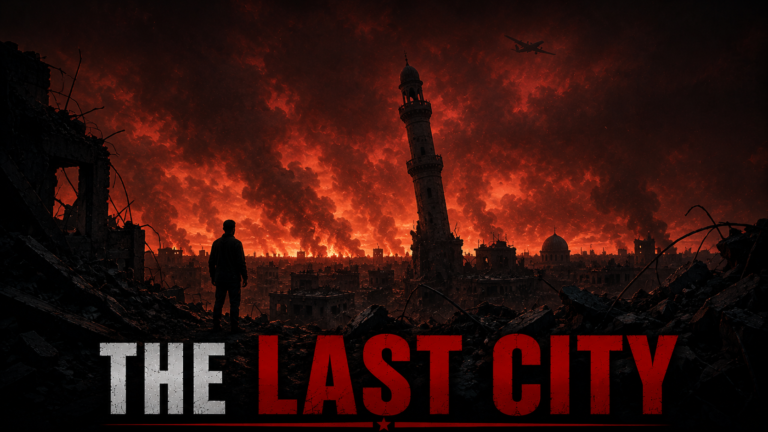
On the afternoon of October 3rd, 1993, a force of approximately one hundred and sixty American soldiers Rangers, Delta Force operators, and Night Stalker helicopter crews launched a raid into the heart of Mogadishu, Somalia, that was supposed to last no longer than sixty minutes. The target was two senior lieutenants of Mohamed Farrah Aidid, the most powerful warlord in a city that had become the most dangerous urban environment on Earth.
The plan was precise. The intelligence was current. The soldiers were among the best trained in the United States military. The operation had been rehearsed. The exit routes were mapped. Everything, by every measure that military planners apply to such things, was ready.
Eighteen hours later, eighteen American soldiers were dead. Seventy-three were wounded. Two Black Hawk helicopters had been shot down over the city. A third had crash-landed. The bodies of American servicemen had been dragged through Mogadishu’s streets while crowds cheered. And the most powerful military force on Earth had spent an entire night fighting to recover its dead and its wounded from a city block in a country that most Americans could not have found on a map six months earlier.
The mission that was supposed to last an hour became the most intense sustained urban combat American forces had experienced since Vietnam. And the political decisions that put those soldiers in that city without the armored support they had specifically requested, without the heavy reinforcements that their commanders had asked for and been denied were made not in Mogadishu but in Washington, in the offices of people who would never hear a shot fired in anger.
To understand how October 3rd happened, you have to go back further to the humanitarian impulse that sent American forces to Somalia in the first place, and to the political calculations that progressively stripped away the military capability that made the mission viable. Somalia in 1992 was a nation in the process of destroying itself.
The government of Siad Barre had collapsed in 1991, leaving a vacuum filled immediately by competing clan militias that carved the country into fiefdoms maintained by violence and armed robbery. The humanitarian consequences were catastrophic. An estimated three hundred thousand Somalis died of famine and violence in 1992 alone, with international aid organizations reporting that their relief supplies were being systematically looted by militia forces before they could reach the civilian populations they were intended to feed.
President George H.W. Bush authorized Operation Restore Hope in December 1992 a large-scale American-led military intervention designed to secure humanitarian aid corridors and stabilize the environment sufficiently for relief organizations to function. At its peak, the intervention involved twenty-five thousand American troops and a significant multinational force operating under a robust military mandate. The operation was, by the standards of the environment, successful aid began moving, famine conditions moderated, the immediate humanitarian crisis was addressed. Bush left office in January 1993 having launched an intervention that appeared to be working.
What Bill Clinton inherited when he took office was a military commitment in a country where the underlying political conditions the clan rivalries, the militia power structures, the absence of any legitimate governmental authority had not been addressed by the humanitarian mission and were not going to be resolved by military presence alone.
The Clinton administration’s approach to Somalia was shaped by a concept called “mission creep” in reverse the gradual reduction of the American military footprint in Somalia as the humanitarian stabilization phase was deemed complete, and the transfer of authority to a United Nations peacekeeping mission. American forces were drawn down from twenty-five thousand to a support and quick reaction force of significantly smaller size. The heavy armor the tanks and armored personnel carriers that had provided the intervention’s backbone was withdrawn. What remained was lighter, faster, and considerably more vulnerable.
The political context shifted dramatically in June 1993 when Pakistani UN peacekeepers were ambushed and killed by Aidid’s militia in an attack that left twenty-four dead. The UN Security Council authorized the arrest and detention of Aidid, transforming the Somalia mission from humanitarian stabilization into active manhunting a fundamentally different military task that the lighter American force now in-country was not configured for.
Task Force Ranger built around a Delta Force element and a Ranger battalion, supported by the 160th Special Operations Aviation Regiment’s Night Stalker helicopter crews was deployed to Mogadishu in August 1993 specifically to capture or kill Aidid and his senior lieutenants.
Task Force Ranger’s commander, Major General William Garrison, submitted specific requests for reinforcement before the October 3rd operation. He asked for AC-130 Spectre gunships heavily armed fixed-wing aircraft capable of providing devastating close air support in an urban environment. He asked for armor M1 Abrams tanks and M2 Bradley fighting vehicles to provide protected ground movement capability and the kind of firepower that would deter the militia attacks that had already characterized previous operations in Mogadishu.
Both requests were denied. The AC-130s were withdrawn from the theater in September 1993, a decision made in Washington based on political sensitivities about the escalating nature of the mission. The armor request was denied by the Secretary of Defense, Les Aspin, who later acknowledged the decision as a mistake an acknowledgment that came too late to matter for the soldiers who needed the tanks on October 3rd.
The battle itself began at 3:32 in the afternoon an unusual time for special operations, which typically prefer the cover of darkness, but dictated by the intelligence window that indicated the target personnel were present at the Olympic Hotel in Bakara Market. Four Black Hawk helicopters inserted the assault force by rope into the target area while a twelve-vehicle ground convoy moved to establish blocking positions and ultimately extract the assault element with its prisoners. The operation went according to plan for approximately fifteen minutes. The target personnel were captured. The force began consolidating for extraction.
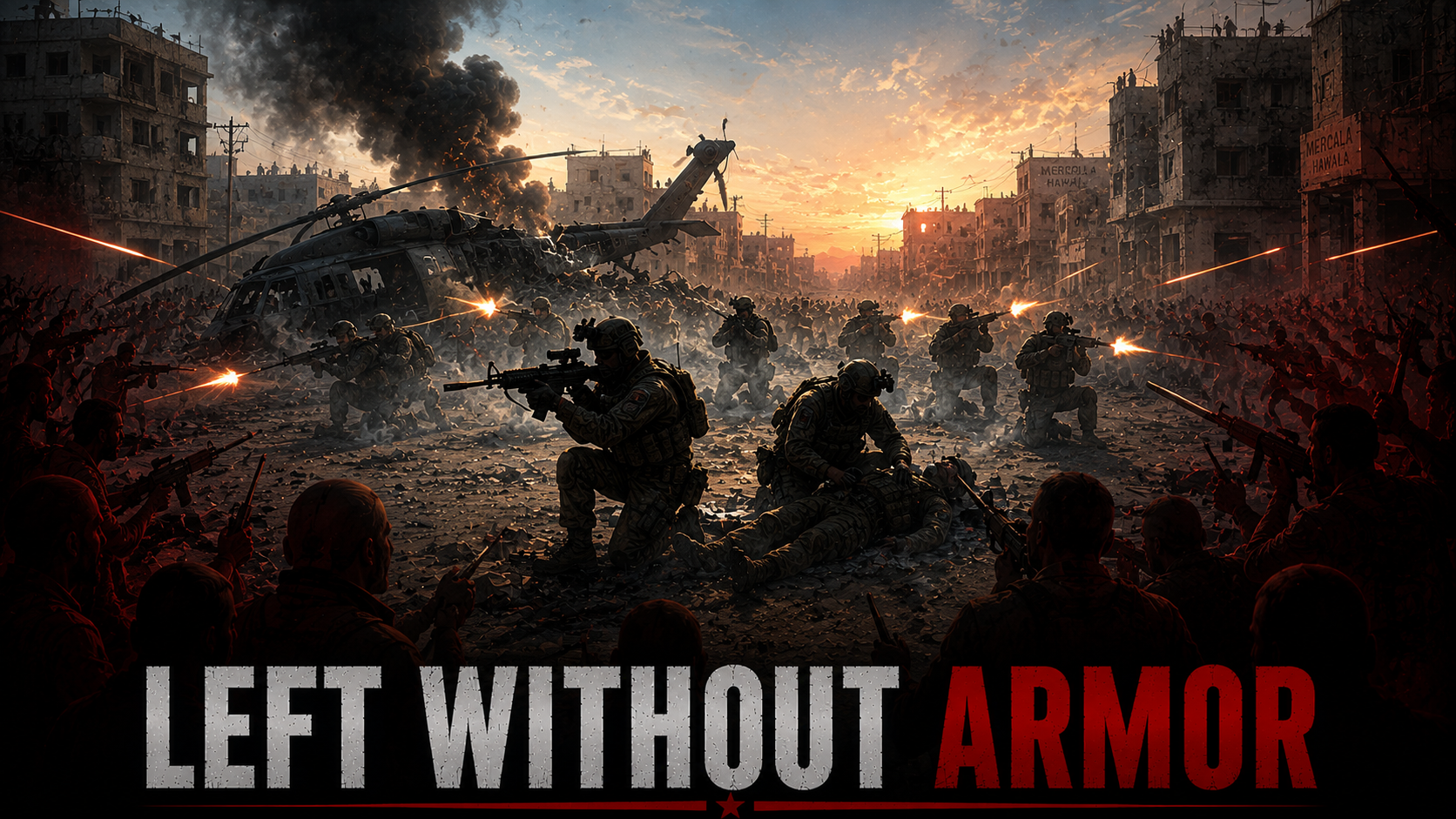
Then a Black Hawk helicopter designated Super Six One, piloted by Chief Warrant Officer Cliff Wolcott, was hit by a rocket-propelled grenade and crashed approximately three hundred meters northeast of the target building. The RPG a weapon that American planners had assessed as unlikely to successfully engage a helicopter flying at combat speed and altitude found its mark through a combination of militia preparation, volume of fire, and the particular geometry of the urban environment that funneled the helicopter’s flight path through engagement zones that Aidid’s militia had prepared in advance.
Wolcott and his co-pilot were killed in the crash. Two other crew members survived. The Ranger and Delta personnel who had been moving toward extraction immediately diverted toward the crash site because American military doctrine, American professional culture, and the most basic covenant between soldiers does not permit abandoning wounded or dead comrades in a hostile environment.
While the ground force moved toward Super Six One’s crash site, a second Black Hawk Super Six Four, piloted by Chief Warrant Officer Michael Durant was hit by another RPG and crashed approximately a mile to the south, deeper into the city and further from any friendly position. Two Delta Force snipers, Master Sergeant Gary Gordon and Sergeant First Class Randy Shughart, observing from a third helicopter, voluntarily requested and received permission to be inserted at the Super Six Four crash site to protect Durant and the surviving crew from the militia forces rapidly converging on the wreckage.
They knew they had to know, given what they could see from the air that they were inserting into an untenable position with no realistic prospect of external support arriving in time. They inserted anyway. Both men were killed in the fighting that followed, having held off the militia long enough that Durant survived badly wounded, taken prisoner, eventually released. Gordon and Shughart were awarded the Medal of Honor posthumously the first Medals of Honor awarded since the Vietnam War.
The ground convoy that was supposed to extract the assault force had meanwhile become a running catastrophe. Navigating Mogadishu’s streets under constant fire, without the armored vehicles that had been requested and denied, the convoy’s vehicles unarmored Humvees and trucks were devastated by militia fire. Soldiers were killed and wounded in vehicle after vehicle. The convoy attempted multiple routes to the crash site of Super Six One, was stopped by militia roadblocks and fire each time, and eventually withdrew to the Pakistani-controlled stadium with its wounded. It never reached the crash site.
The soldiers at Super Six One’s crash site a steadily growing group of Rangers and Delta operators defending a tight perimeter around the wreckage and the wounded fought through the night without armored support, without AC-130 air cover, with ammunition running critically low, in temperatures that made movement difficult and dehydration a genuine medical threat.
They called for support. They received helicopter fire from the Night Stalker crews who flew continuous, dangerous missions through the night to provide what aerial fire support they could. They received resupply by helicopter. What they did not receive, until early morning, was a ground relief force.
That relief force a mixed column of American, Pakistani, and Malaysian armored vehicles finally reached the Super Six One crash site at approximately 6:30 on the morning of October 4th. The Pakistanis brought the tanks that the American commanders had requested and been denied. The Malaysians brought armored personnel carriers.
The relief column loaded the living and the dead and extracted under continued militia fire. The last American position in Mogadishu was evacuated by mid-morning. Eighteen Americans were dead. The Somali militia had suffered catastrophic casualties estimates range from several hundred to over a thousand killed and wounded but in the arithmetic of the political aftermath, that asymmetry was irrelevant.
The political consequences arrived before the last helicopter had landed. Images of American bodies being dragged through Mogadishu’s streets were broadcast on news networks around the world. The footage shot by Somali cameramen and quickly transmitted internationally produced a public reaction in the United States that was immediate, visceral, and politically overwhelming.
A congressional delegation arrived in Washington demanding American withdrawal. Public polling showed support for the Somalia mission collapsing within days of the battle. President Clinton, facing the political reality that the American public had not been prepared for casualties in what had been presented as a humanitarian mission, announced on October 7th that American forces would be withdrawn from Somalia by March 31st, 1994.
The decision to withdraw made under political pressure, within days of a battle that the military had not lost in any tactical sense had consequences that extended far beyond Somalia. Aidid, who had not been captured, declared victory. The message that traveled through the networks of militant organizations that were watching the United States in the early 1990s was unmistakable: American public opinion could not sustain casualties, American political will could be broken by sufficient bloodshed, and the withdrawal of American power from a difficult environment was achievable through determined resistance.
Osama bin Laden later cited Mogadishu specifically as evidence that America could be driven from the battlefield. Whether that assessment was accurate or a convenient rationalization, it shaped Al-Qaeda’s strategic thinking through the decade that followed.
The armor request that Les Aspin denied was the decision that defined the battle’s outcome most directly. The tanks that Pakistani forces brought to the relief column on the morning of October 4th driving through the same streets that the Ranger ground convoy had been unable to traverse the previous afternoon demonstrated precisely what armored support would have done for the mission.
The militia that had stopped unarmored Humvees with RPGs and small arms fire could not stop tanks. The convoy that could not reach Super Six One’s crash site with soft-skinned vehicles reached it in hours with armor. The soldiers who spent the night holding a crash site perimeter without relief would have been extracted hours earlier if the vehicles requested had been available.
Aspin resigned as Secretary of Defense in December 1993. He cited the Somalia decision among the most difficult of his tenure. The acknowledgment that the armor denial had been a mistake was honest and, for the families of the soldiers who died in Mogadishu, entirely insufficient. The political logic that drove the decision that deploying heavy armor would send the wrong signal about American intentions in Somalia, would appear escalatory, would complicate the eventual transition to UN authority was the logic of people managing a political narrative rather than supporting a military mission. It was the logic of a Washington that had not fully processed what it had sent soldiers into and what those soldiers needed to survive.
The men who fought in Mogadishu on October 3rd and 4th, 1993 did everything that soldiers can do. They fought with extraordinary courage in conditions of extraordinary difficulty. They recovered their dead. They held their perimeter. They completed their primary mission the targets were captured. They did not fail. The decision that failed them was made six weeks earlier, in an office in the Pentagon, by a man who would resign within two months and who would spend the remainder of his life understanding what his decision had cost.
Eighteen names. Eighteen men who went into Mogadishu on a sixty-minute mission and did not come back. The decision that sent them in without the equipment they needed to survive was not made in Mogadishu. It was made in Washington. And Washington has been living with that decision, and its consequences, ever since.